Window of Tolerance
Understanding the space where you feel most like yourself
We all have a range where we feel able to think clearly, manage our emotions and respond rather than react. This is often called our Window of Tolerance.
When you're within your window, you may still experience stress, sadness or frustration, but you are generally able to stay connected to yourself and the people around you.
Your window is not fixed. It can become narrower during times of stress, grief, burnout or trauma, and widen again as your nervous system experiences more safety and support.
When you're within your window
You may notice that you can:
think clearly and make decisions
stay connected to your feelings without becoming overwhelmed
listen and communicate more easily
recover from setbacks more quickly
feel present and engaged with life
Being in your window doesn't mean feeling happy all the time. It means your nervous system has enough capacity to cope with what is happening.
When you move above your window
Sometimes your nervous system becomes over-activated. This is often called hyperarousal.
You might notice:
racing thoughts
anxiety or panic
irritability or anger
feeling constantly on edge
difficulty sleeping
wanting to escape or stay busy
Your body is preparing to protect you.
When you move below your window
At other times, your nervous system may become under-activated. This is often called hypoarousal.
You might notice:
feeling numb or disconnected
low energy or exhaustion
withdrawing from people
difficulty concentrating
feeling flat or hopeless
wanting to hide or shut down
This is also a protective response — your system is trying to conserve energy when things feel too much.
The goal isn't to stay in the middle all the time
Everyone moves above and below their window from time to time. The goal isn't perfection. The goal is becoming more aware of where you are and learning what helps you return to a place where you feel more grounded and connected.
You might gently ask yourself:
Where am I right now — above, within or below my window?
What is my body telling me?
What small step might help me move back towards feeling steadier?
Using the DIAL
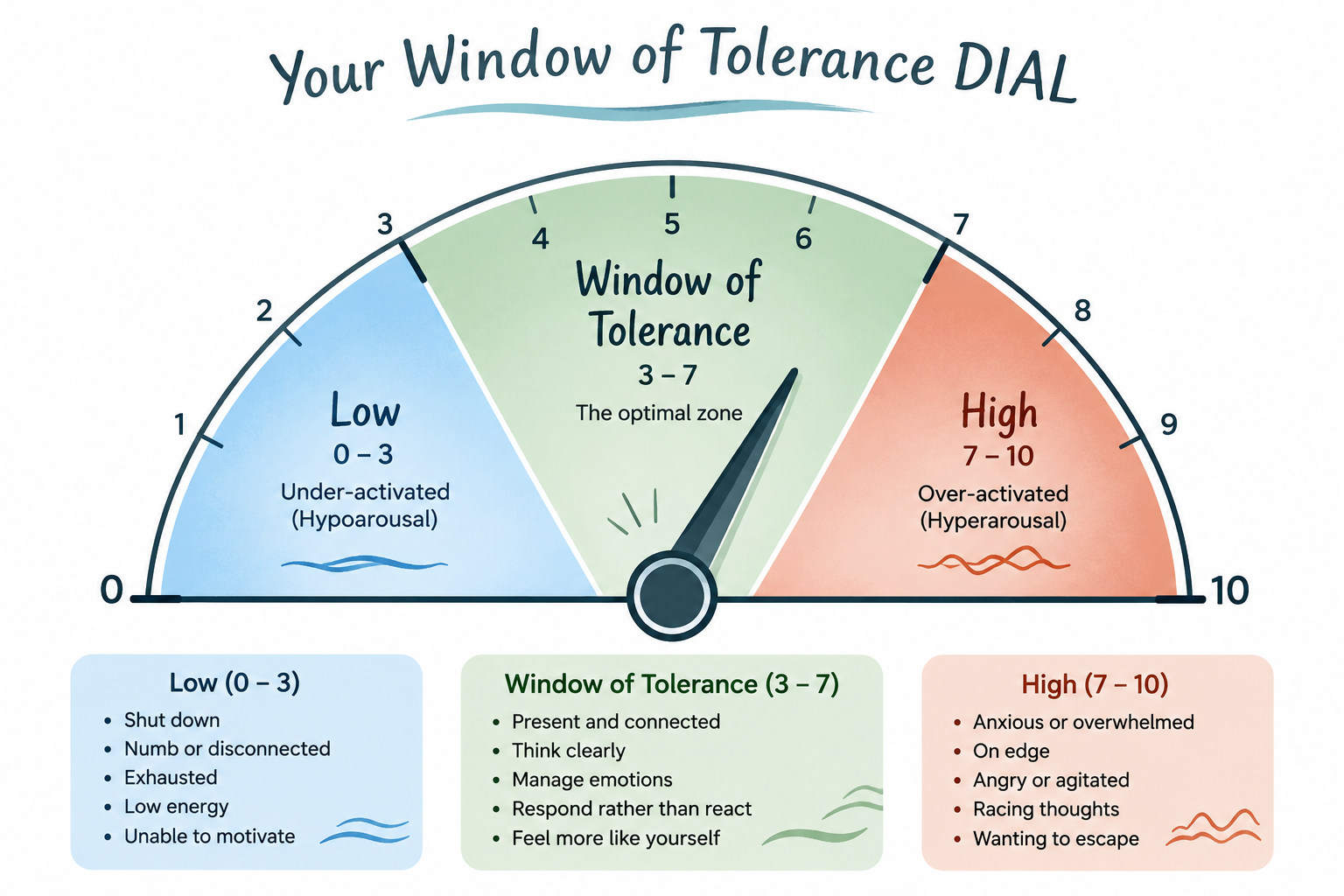
You can think of your nervous system a little like a dial. Throughout the day, your level of activation can move up and down depending on what is happening around you and within you.
The DIAL is a simple way to pause and notice where you might be right now. 0–3 represents lower activation, 3–7 is your Window of Tolerance, and 7–10 represents higher activation.
There is no “right” number to be on. The aim is simply to notice where you are, understand what your nervous system may be communicating, and consider what might help you move towards feeling a little more settled and regulated.
You might ask yourself: Where is my DIAL right now?
Explore More
Supporting Your Nervous System Learn practical ways to help your body feel calmer and more settled.
Grounding Tools Simple techniques you can use when you're feeling overwhelmed or disconnected.
Understanding Triggers Recognise what activates your nervous system and how to respond with greater awareness.